From Cortijo El Guajiro to today
El Patio Sevillano history
The story of El Patio Sevillano as the venue tells it: Cortijo El Guajiro in 1952, El Patio Andaluz in 1956 and the move to the Guadalquivir in 1973.
Book the flamenco show ↗Quick answer
El Patio Sevillano traces its roots to 1952 and a tablao called Cortijo El Guajiro, which the venue calls a pioneer in Seville and in Spain. Its history page then describes El Patio Andaluz on the Plaza del Duque in 1956 and a move in 1973, under the present name, to the bank of the Guadalquivir facing Triana. Wikipedia dates the spread of tablaos to the 1960s, so the oldest claim is the venue's own.
Cortijo El Guajiro, 1952
The venue's history page begins in 1952, with a tablao called Cortijo El Guajiro, which it describes as a pioneer in Seville and in Spain. It says artists such as Trini España, Matilde Coral, El Farruco, Manuela Vargas and Rafael El Negro began there, and that visitors from politics, cinema and art came through, among them Lola Flores and Agustín Lara, as well as the bullfighters Belmonte and El Gallo. Old photographs on the page carry dates from the 1950s to the 1970s.
El Patio Andaluz, 1956
The second chapter, again in the venue's words, is 1956, when it opened El Patio Andaluz on the Plaza del Duque, in the middle of the historic centre. The page names the artists who performed there: Cristina Hoyos, Milagros Mengíbar, who received a national dance prize, and Chano Lobato. Wikipedia describes Cristina Hoyos as a flamenco dancer, choreographer and actress born in Seville. Her own company later became the first flamenco company to appear on the stage of the Paris Opera, according to that article.
El Patio Sevillano, 1973
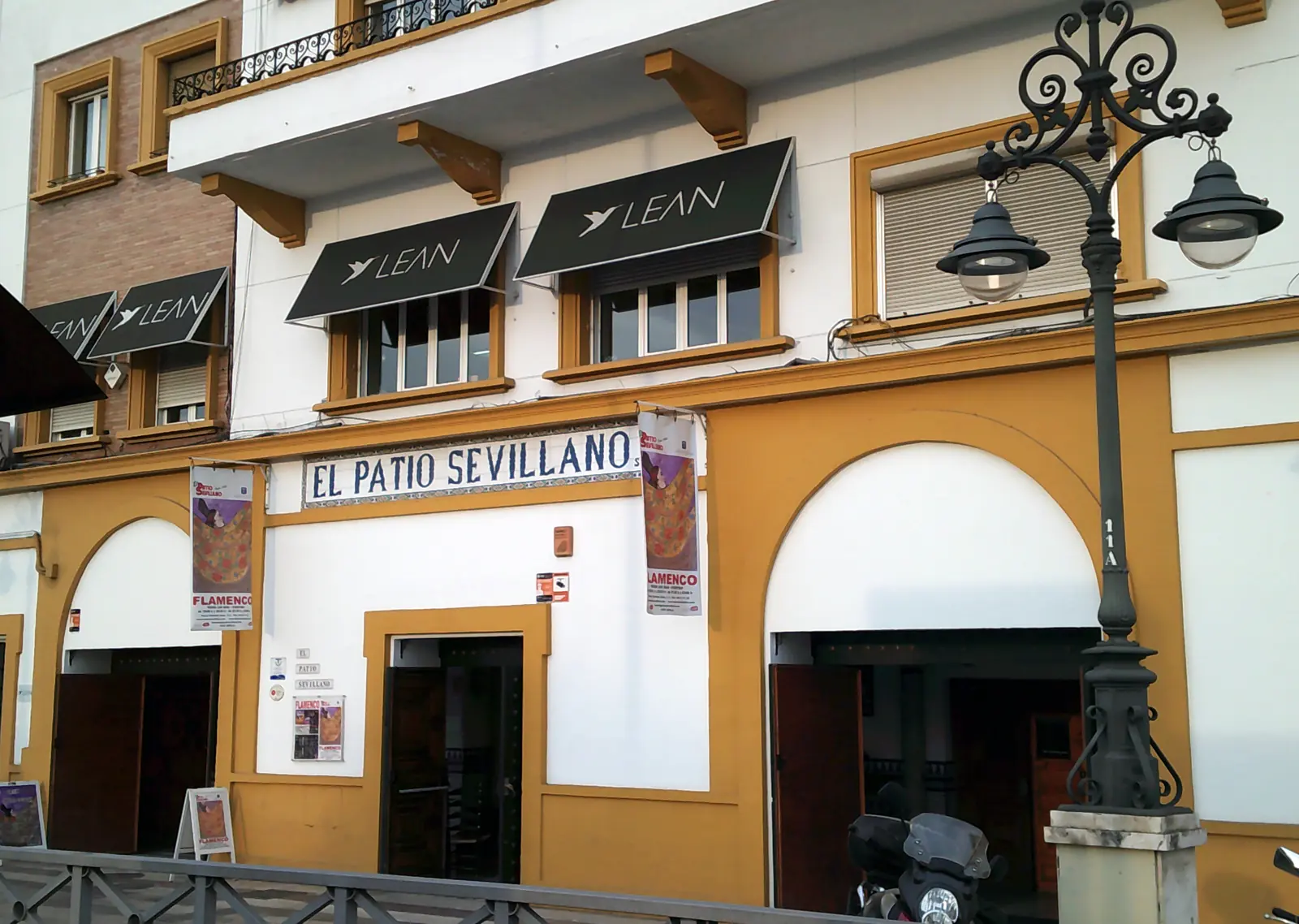
The page says that in 1973 the company moved, with the name El Patio Sevillano, to the bank of the Guadalquivir facing the Triana quarter, next to the Maestranza bullring and flanked by the Torre del Oro and the Triana bridge. It lists artists of that period, including Isidro Vargas, Ana María Bueno and Miguel Boceta. The venue's current site gives its address as Avenida de las Razas 20, so use the map pin on your booking when you head out.
What the venue says about itself
The venue calls itself the oldest tablao in Seville and says it has put on the best flamenco in the city for more than half a century. Its history page also lists recognition: a prize from the organising commission for World Tourism Day on 27 September 1996 for its work promoting Spanish art and folklore, and a tourism-promotion prize from the Seville tourism consortium at Fitur in 2003. These are the venue's own statements of its record, and they are given here as such.
How that fits the wider history
Wikipedia says tablao venues developed during the 1960s across Spain, replacing the earlier cafés cantantes. It adds that from the mid-1800s into the 1920s those cafés were where professional flamenco was staged, and that the first of them opened in Seville. Against that, the venue dates its own pioneering tablao to 1952. Sources differ on how to define a tablao and when the form began, so it is fairer to say that El Patio Sevillano has a long record than to rank it against others.
The thread that runs through it
Across three homes the idea stays the same: a stage in Seville where the artists of the day perform flamenco for visitors and locals. The venue's show page says it puts on a show every day of the year and currently has a company of dancers, singers and guitarists, all live. The names change with the decades. The format, a seated audience, a drink or a dinner and a company on a stage, is the part you can book today.
Read next: El Patio Sevillano tickets
Frequently asked questions
When was El Patio Sevillano founded?
The venue's history page traces its roots to 1952 and a tablao called Cortijo El Guajiro. It uses the name El Patio Sevillano from the move in 1973.
Is it the oldest tablao in Seville?
The venue says so. Wikipedia dates the spread of tablaos to the 1960s, so treat the claim as the venue's own.
Which famous artists performed there?
The venue says Matilde Coral, El Farruco and Cristina Hoyos danced on its stage, and its history page names others from its earlier homes.
Sources